Eco-Friendly Promotional Products for Australian Businesses
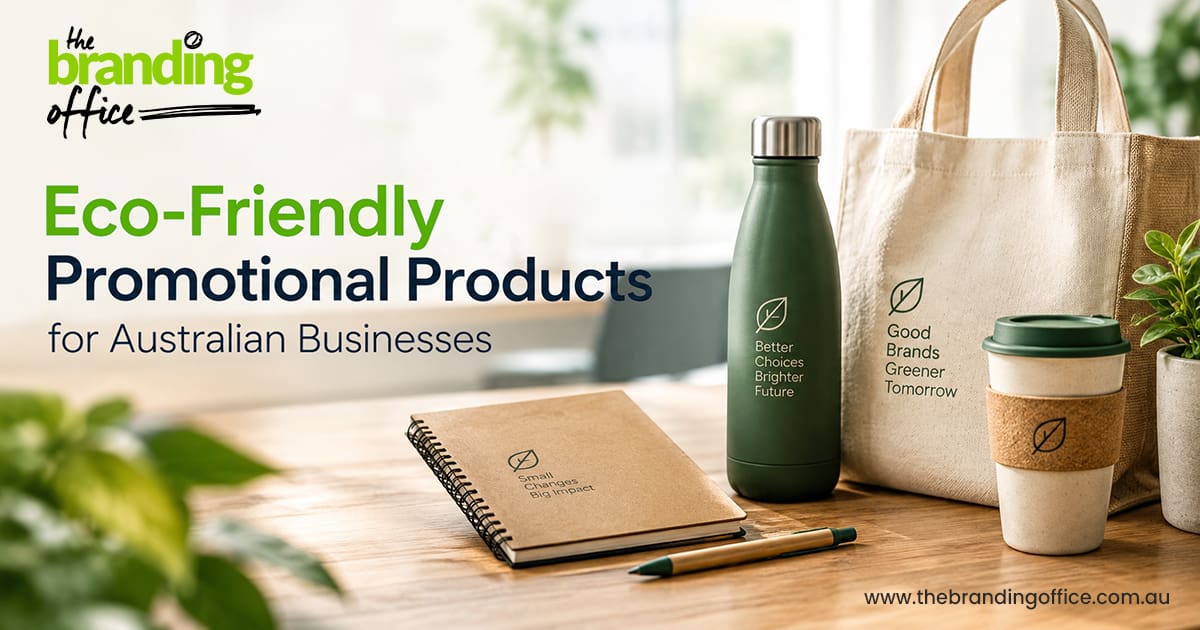
More Australian businesses are getting fussier about what they slap their logo on. Merch is still a solid way to stay visible, but there's a real shift toward products that actually do something and don't clash with a company's sustainability messaging.
That's the gap eco-friendly promotional products fill.
Rather than another giveaway destined for landfill, businesses are turning to reusable drinkware, recycled bags, bamboo stationery and sustainable notebooks — thingfs people genuinely hang onto and use.
For Australian businesses, though, "eco-friendly" isn't a tick-box. Material, usefulness, durability, branding method and who's actually receiving the product all factor in. Here's how to think it through.
What Are Eco-Friendly Promotional Products?
Eco-friendly promotional products are branded merchandise made from materials or processes designed to cut back on conventional, resource-heavy alternatives.
Think bamboo, recycled PET (rPET), recycled cotton, cork, recycled aluminium and seed paper — showing up in bags, drinkware, stationery, tech accessories, apparel and corporate gifts.
It's a broad label, so it's worth looking past it. If sustainability actually matters to your business, ask what the product's made from, whether the recycled content can be backed up, and how it's likely to be used day-to-day.
That's really the point: choose sustainable promotional products on the full story, not just the word "eco" on the packaging.
Why Are Australian Businesses Choosing Sustainable Promotional Products?
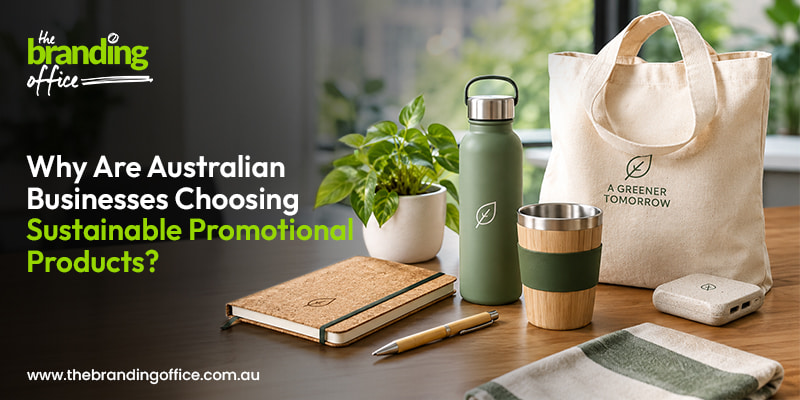
Promotional merchandise earns its keep when someone actually uses it.
A bottle that goes to work every day, a tote used for the weekly shop, a notebook that lives on a desk — all of these keep your brand in view long after the event that handed them out is forgotten. The Branding Office's eco range currently runs on materials like bamboo, rPET, recycled cotton, cork and recycled aluminium.
There's a branding upside too. A product people actually use gives your business repeated, everyday visibility instead of one fleeting moment.
And for businesses already building sustainability into how they operate, eco-friendly merch just makes the whole brand feel more joined-up.
Choose Products People Will Actually Use
The easiest mistake to make with promotional merchandise is picking something because it looks environmentally friendly.
The better question is simpler: will the person receiving it actually use it?
A decent reusable coffee cup will likely get more mileage from an office worker than a novelty item that ends up in a drawer. A recycled tote earns its place at the supermarket, the markets, a conference, or just the weekly shop.
Start with your audience — where will they use it, does it suit their work or lifestyle, will they reach for it more than once, and does it fit the event and the brand. Answering those narrows the shortlist fast.
Consider the Material Behind the Product
Material is where sustainable branded merchandise actually gets decided.
-
Bamboo: shows up in drinkware, pens and desk accessories — a natural look that suits brands after a more organic feel.
-
rPET: is recycled PET plastic, often reclaimed from used bottles, and turns up in bags, drink bottles and apparel.
-
Recycled cotton: works well for tote bags and pouches — a solid alternative to virgin-material textiles.
-
Cork: is naturally renewable and gives coasters, notebooks and tech accessories a texture that stands apart from anything plastic.
-
Recycled aluminium: is the go-to for drink bottles and flasks where durability and repeat use matter.
The Branding Office's eco range covers these and more, with supplier documentation — GRS, OEKO-TEX or FSC — available on request where relevant.
Match the Product to Your Campaign
The same green promotional products won't land the same way in every campaign.
A trade show calls for something attendees can carry — recycled totes, reusable bottles. Employee onboarding suits a mix of notebooks, drinkware and desk accessories. Corporate gifting probably wants something a bit more premium, while a community event is better served by lower-cost items you can hand out in bulk.
The thread running through all of it: the product needs a reason to exist beyond carrying your logo.
Eco-Friendly Promotional Products for Events
Events are where most promotional merchandise gets handed out — and where it most often gets wasted.
Bulk giveaways with no real purpose tend to end up in the bin. For events and trade shows, aim for products that stay useful once the event's over. A bag that carries the day's materials, a bottle or notebook that goes back to the office with them.
It also helps when the product actually fits the event — recycled stationery at a sustainability conference, reusable drinkware at an outdoor event.
Use Eco Promotional Products for Corporate Gifting
Corporate gifting is another place where sustainability and usefulness line up nicely.
Rather than picking something because it looks impressive unwrapped, think about what the recipient will actually keep using. A good reusable bottle, a bamboo desk accessory, a recycled notebook, a cork tech accessory — these tend to become part of someone's routine rather than clutter.
That makes eco-friendly corporate gifts a strong fit for client appreciation, onboarding, milestones and relationship-building.
Branding matters here too — a subtle, well-placed logo usually reads more professional than covering the whole product.
Don't Confuse "Eco" With One Specific Material
No single material automatically makes a product the right sustainable choice.
Bamboo, recycled plastic, recycled cotton, cork, recycled aluminium and seed paper all behave differently and suit different jobs. So the smarter approach is judging the whole product rather than latching onto one word in the description.
Work through it in order: material, durability, usefulness, expected lifespan, branding, end-of-life. That sequence keeps the decision meaningful instead of treating "eco" as a marketing sticker.
How to Choose Eco-Friendly Promotional Products in Australia
Start with your campaign, not the product catalogue.
Nail down your audience and the purpose of the merchandise first. Then work out quantity, rough budget and where the items will actually be used. From there, compare materials, branding options and build quality.
Worth asking your supplier about minimum quantities, production times, artwork requirements and any material documentation on offer. The Branding Office runs low minimums on most of its eco range and delivers Australia-wide, with production times varying by product and artwork approval — handy to know if you're working to a fixed event date.
Make Sustainability Part of the Product Choice
Going sustainable doesn't mean giving up on good branding.
The best eco-friendly promotional products pair something genuinely useful with a suitable material and branding that doesn't overdo it. When people actually use what you give them, your business stays visible through everyday moments instead of a single handout.
Australian businesses now have a real spread of recycled, plant-based and renewable-material merchandise to build campaigns around — ones that actually reflect sustainability-minded brand values rather than just gesturing at them.
Whether it's a trade show, a gifting campaign, onboarding or a customer giveaway, start with what your audience will actually want to keep. Then pick the material, product and branding to match.
That one shift — from "what can we give away" to "what will people actually want to keep" — is what makes promotional merchandise worth the spend.